


Meet Angeline: Finding Herself Again Between the Pages
"This book gave me everything I needed. The spiral binding lets me mark my favorite passages without losing my place, and I keep coming back to it. It's not just a book anymore. It's become a keeper."

Some stories find us exactly when we need them most. For Angeline, a 32-year-old graphic designer living in a converted loft in Brooklyn, that story was "It Starts with Us" by Colleen Hoover. But this wasn't just about discovering a page-turning romance. It was about rediscovering herself.
At Lay It Flat, we believe the right book at the right time can transform more than just your reading list. It can transform how you see yourself, your relationships, and the everyday moments that make up a life. Angeline's story captures this perfectly. Her review stood out because it revealed something deeper than enjoyment: recognition, connection, and the courage to keep certain stories close.
The Woman Who Stopped Reading for Herself
Angeline had always been a reader. Past tense. Intentional.
Throughout college and her early twenties, books were her refuge. She'd curl up in coffee shops with novels that made her feel everything, stories about messy people making messy choices, characters who felt real enough to text. Reading wasn't just a hobby. It was how she processed the world.
But somewhere between career advancement, a serious relationship that ended badly, and the constant scroll of social media, reading had become another item on an endless to-do list. The books she did read were productivity guides, design theory, and industry newsletters. Practical. Professional. Perfectly boring.
Her small apartment reflected this shift. The built-in bookshelf that once overflowed with dog-eared paperbacks now displayed design books arranged by color, succulents in minimalist pots, and a vintage camera she'd bought because it looked good. Everything was curated. Nothing was personal.
"I turned into someone who decorated with books instead of reading them," Angeline admitted later. "My space looked great on Instagram, but it didn't feel like mine anymore."
The Moment She Realized Something Was Missing
The wake-up call came on an unremarkable Tuesday evening. Angeline was lying in bed, scrolling through her phone for the third hour straight, when she realized she couldn't remember the last time she'd felt genuinely excited about anything. Not work projects, weekend plans, or even the carefully curated self-care routines she'd adopted.
She was functioning. But she wasn't feeling.
That weekend, while avoiding her laptop and the freelance work she'd brought home, Angeline scrolled through social media when a BookTok video popped up on her feed. A reader was holding up "It Starts with Us" by Colleen Hoover, tears streaming down her face, unable to articulate why the book had affected her so profoundly.
Something about that raw emotion caught Angeline's attention. She recognized the author's name. Colleen Hoover. Her younger sister had mentioned her; she'd seen the books everywhere online but dismissed them as "not her thing" without ever considering why.
On impulse, she opened a new tab and searched for the book. The cover was simple but striking. She read the description and then clicked through to read a sample of the first chapter.
Five pages in, completely absorbed, she realized she was hooked.
The Research Phase (Or How She Talked Herself Into It)
Angeline didn't buy the book immediately. Old habits were hard to break, and impulse purchases felt irresponsible, even when they cost less than her morning coffee.
Instead, she did what any millennial would do. She researched.
She read reviews on Goodreads, where readers described staying up all night to finish the book. She watched BookTok videos of people crying over the story's emotional depth. She read blog posts analyzing the characters and their complex relationships. She even found discussion threads about reading "It Ends with Us" first or jumping straight into the sequel.
What struck her most were the comments from readers who said the book made them feel seen. It dealt with real issues, complicated emotions, and the messy, imperfect love that exists in the world.
"I kept looking for reasons not to buy it," Angeline said. "I thought maybe I'd outgrown these kinds of stories. Maybe I was too old for romance novels. Maybe it wouldn't live up to the hype."
But one review stopped her cold: "This book reminded me what it feels like to care about fictional people more than my own problems for a few hours. I forgot how much I needed that."
That was it. That was precisely what she needed.
Choosing the Right Format
When Angeline finally decided to buy the book, she found herself on the Lay It Flat website, comparing format options. The book came in multiple versions: hardcover, paperback, and spiral-bound.
The spiral-bound version from Lay It Flat was slightly more expensive than what she'd seen elsewhere, and her practical side immediately questioned whether it was worth it. But then she read the product description and reviews mentioning how the book lay completely flat.
She thought about how she used to read, curled up awkwardly, constantly adjusting her grip to keep pages from flipping closed. She remembered the frustration of holding a book open with one hand while getting comfortable.
"I know this sounds small, but I wanted this book to be comfortable," Angeline explained. "I wanted to read it in bed, on the couch, at the park, without it feeling like a wrestling match. The spiral binding meant I could just relax into the story."
There was something else, too. The spiral-bound format felt intentional, like a book designed to be used and loved rather than just displayed. It felt like the opposite of her carefully curated bookshelf.
She added it to her cart and checked out before she could overthink it.
Falling Back Into Reading
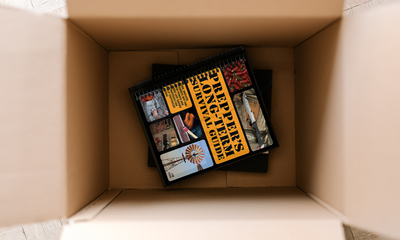
The book arrived two days later. Angeline opened the package that evening, immediately noticing the quality of the spiral binding. It felt substantial, well-made, and designed to last through multiple readings.
She started reading that same evening, propped up against her pillows with a cup of tea growing cold on her nightstand. She'd planned to read for an hour before bed.
She finished at 2 AM.
The story pulled her in immediately: Lily Bloom's journey, her complicated relationship with Ryle, her history with Atlas, and how the book explored love, trauma, and healing. It wasn't escapist fiction that ignored real problems. The story acknowledged how hard it is to make the right choices when your heart pulls you in different directions.
"I forgot what it felt like to be so absorbed in a story that the real world just fades away," Angeline said. "I laughed, I cried, I got angry at characters, I wanted to reach through the pages and shake some sense into them. I felt everything."
The spiral binding proved its worth throughout those hours. She could hold the book with one hand while tucking the other under her pillow. She could set it down flat when she needed to grab tea or wipe her eyes. She could easily flip back to earlier passages to reread favorite lines without losing her place.
These small physical comforts mattered. They let her focus entirely on the emotional journey rather than the mechanics of reading.
The Transformation
In the days after finishing "It Starts with Us," something shifted in Angeline. She found herself thinking about the characters during her commute, analyzing their choices, considering what she would have done differently. She started noticing parallels to her life, relationship patterns, and ways of protecting herself.
The book sat on her nightstand rather than being shelved away. She picked it up and reread favorite passages, moments that had hit particularly hard. The spiral binding made this easy. She could flip to the pages she'd marked with sticky notes and let the book rest flat while she absorbed the words again.
"There's this scene where Lily has to make a tough choice," Angeline said, being careful not to spoil the story. "I must have reread that section five times. Each time, I understood something new about why she made that choice. About what it takes to choose yourself even when it's painful."
She started reading again: not productivity books or design theory, but stories, contemporary romance, women's fiction, books that made her feel connected to characters and their journeys. Her carefully curated bookshelf started looking lived-in again, with books stacked horizontally, spines cracked, and pages marked.
More importantly, she started making choices that felt true to herself rather than curated for an audience. She rearranged her apartment to reflect what she loved rather than what looked good in photos. She started saying no to projects that drained her. She reconnected with friends she'd been too busy for.
What She Learned About Keeping Things
"It Starts with Us" became what Angeline calls a "keeper." Not because it was perfect or life-changing in some dramatic way, but because it reminded her of something essential about herself.
"This book is for keeps," she said simply. "Not just because the story is beautiful, which it is. But because it represents the moment I started choosing what I want instead of what looks right."
The spiral-bound format contributed to this in unexpected ways. Because the book was designed for repeated use, she felt permission to use it. To mark pages, reread sections, and let it become worn and personal rather than pristine and decorative.
"I have books on my shelf that I've read once and never touched again because they're too pretty to mess up," Angeline explained. "This book was different. The spiral binding told me it was okay to make it mine."
Angeline's advice is direct for anyone in a bookstore, wondering whether a romance novel is worth their time: "Stop overthinking it. If you're drawn to a story, that's enough reason to read it. You don't need to justify enjoying fiction. You don't need it to teach you something or improve you somehow. Sometimes you just need to feel things."
She also emphasizes the value of choosing formats that enhance the reading experience rather than hinder it. "The spiral binding made a real difference in how I interacted with this book. It's a small thing that adds up over hundreds of pages and multiple readings."
Looking Forward
Six months after buying "It Starts with Us," Angeline's relationship with reading has completely transformed. She's joined a book club, started a bookstagram account focusing on genuine recommendations rather than aesthetic photos, and has a stack of unread books on her nightstand that excites her.
The Colleen Hoover book remains special, though. It sits on the shelf closest to her reading chair, easily accessible when she needs to remember what it feels like to be fully absorbed in someone else's story.
"I keep coming back to it," Angeline said. "Different passages resonate at different times. That's the mark of a keeper. It grows with you."
She's also become more intentional about how she experiences stories. She's learned that reading isn't a luxury or a waste of time. It's how she processes emotions, explores possibilities, and maintains her sense of self in a world that constantly demands curation over authenticity.
Your Story Starts Here
Angeline's journey reminds us that sometimes the most important thing we can do is permit ourselves to enjoy something simply because it moves us. Romance novels aren't guilty pleasures. They're stories about the most universal human experience: connection.
If you've been telling yourself you don't have time to read for pleasure, or that you've outgrown specific genres, or that books need to be productive rather than enjoyable, consider this your permission to choose differently.
The spiral-bound format of "It Starts with Us" isn't just about convenience. It's about creating books that are designed to be loved, marked up, returned to, and kept close. Books that become companions rather than decorations.
Ready to rediscover what it feels like to be wholly absorbed in a story? Explore "It Starts with Us" and other spiral-bound books designed to lay flat, stay open, and invite you to make them truly yours. Because some stories deserve to be kept, and some books deserve to be loved into their well-worn beauty.